 Just Children
A true story · Mozambique, 1990
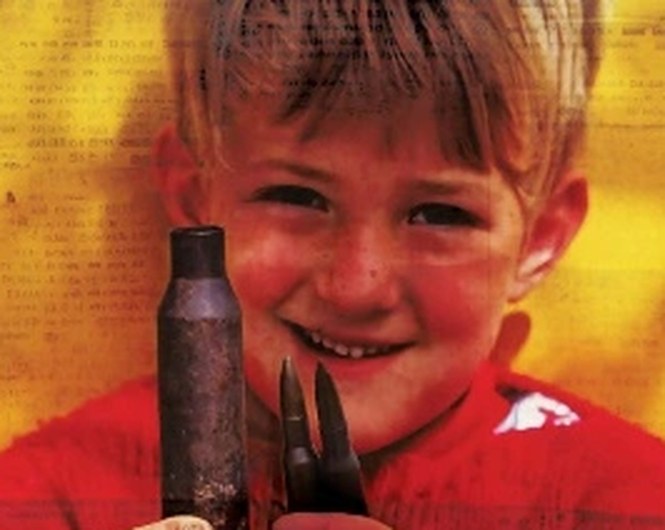
They sailed into paradise. Their captors were children.
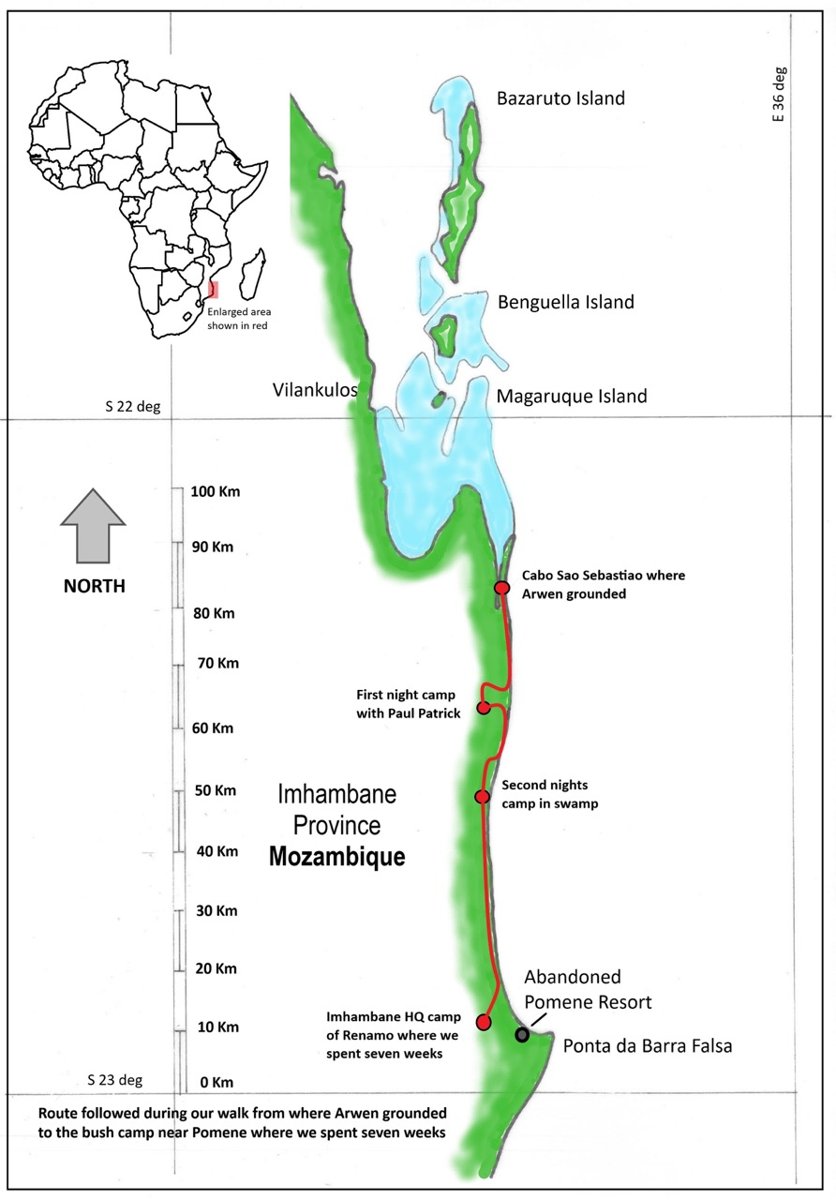
In 1990 a family's yacht ran aground off the coast of Mozambique. Within hours David Muller, his wife and their two children, aged 8 and 5, were prisoners of teenage soldiers in the middle of a civil war. They were held for 49 days.
Just Children was first published as Not Child's Play in 2019 and was only available in South Africa. Feedback showed the story interested readers internationally, and we are happy to announce that Zeytin Press, based in London, has signed a publishing agreement. A new, updated version titled Just Children, edited for an international readership, will be available in June 2027.
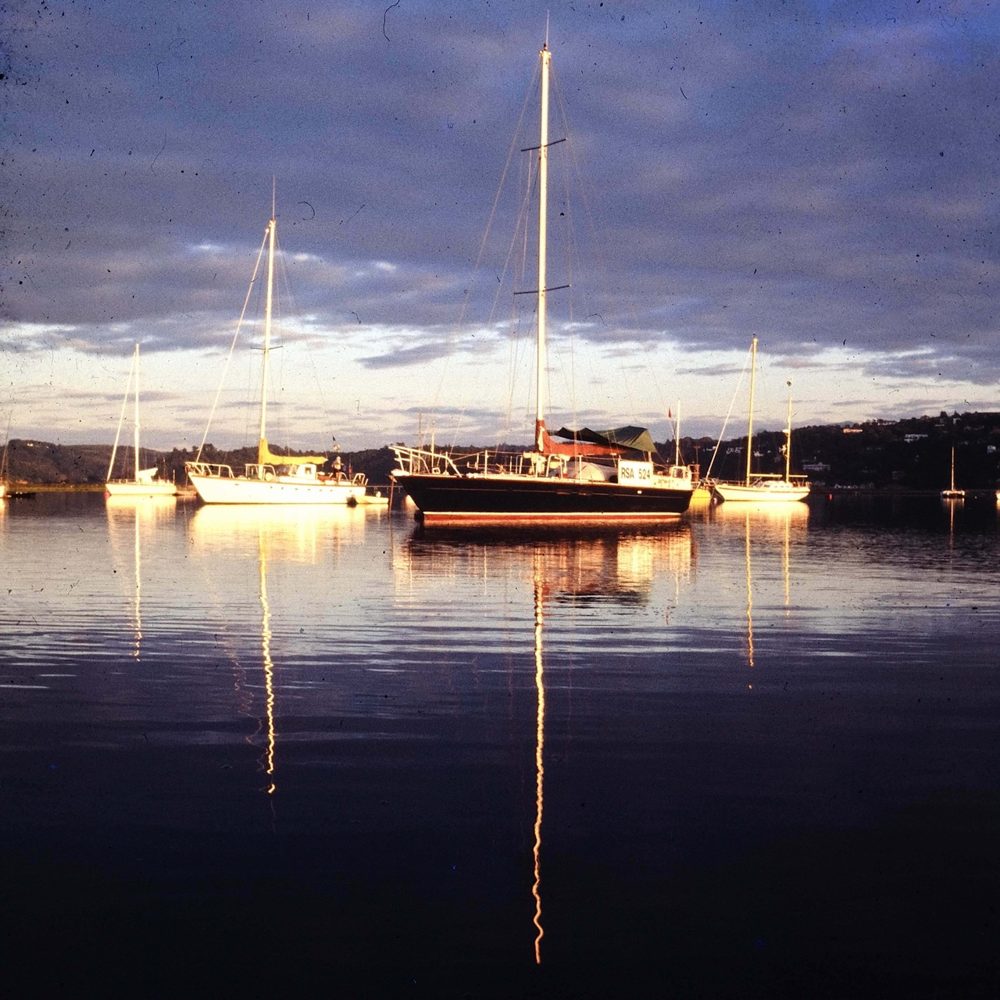
Arwen. David spent ten years building her by hand.
Arwen at anchor in Knysna Lagoon during an earlier voyage.
Heard the podcast?
Have you listened to any of these podcasts?
- What if you were held captive by child soldiers? This Is Actually Happening
- Survival, PTSD and untying the knots HeChangedIt Podcast
- Kali Kat Tap Talks
Then you're in the right place. These photographs add context to what David talks about.
The photographs
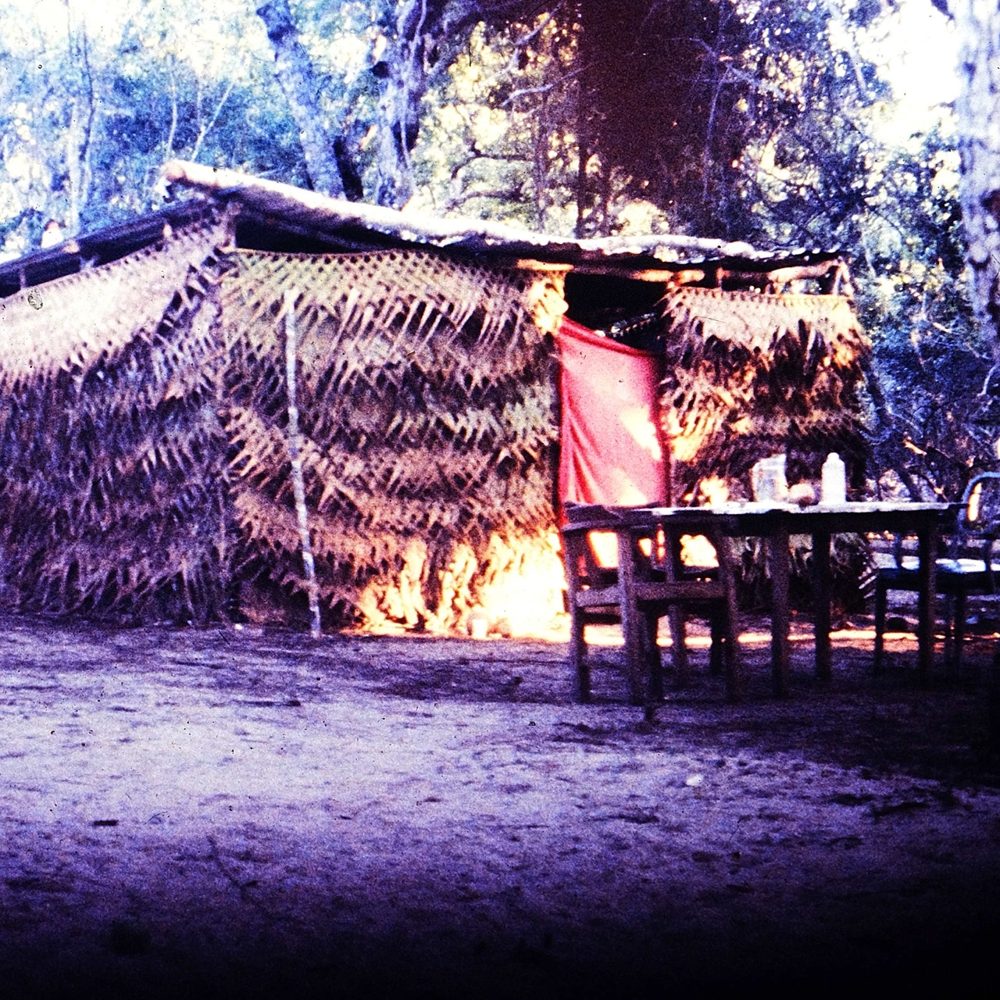
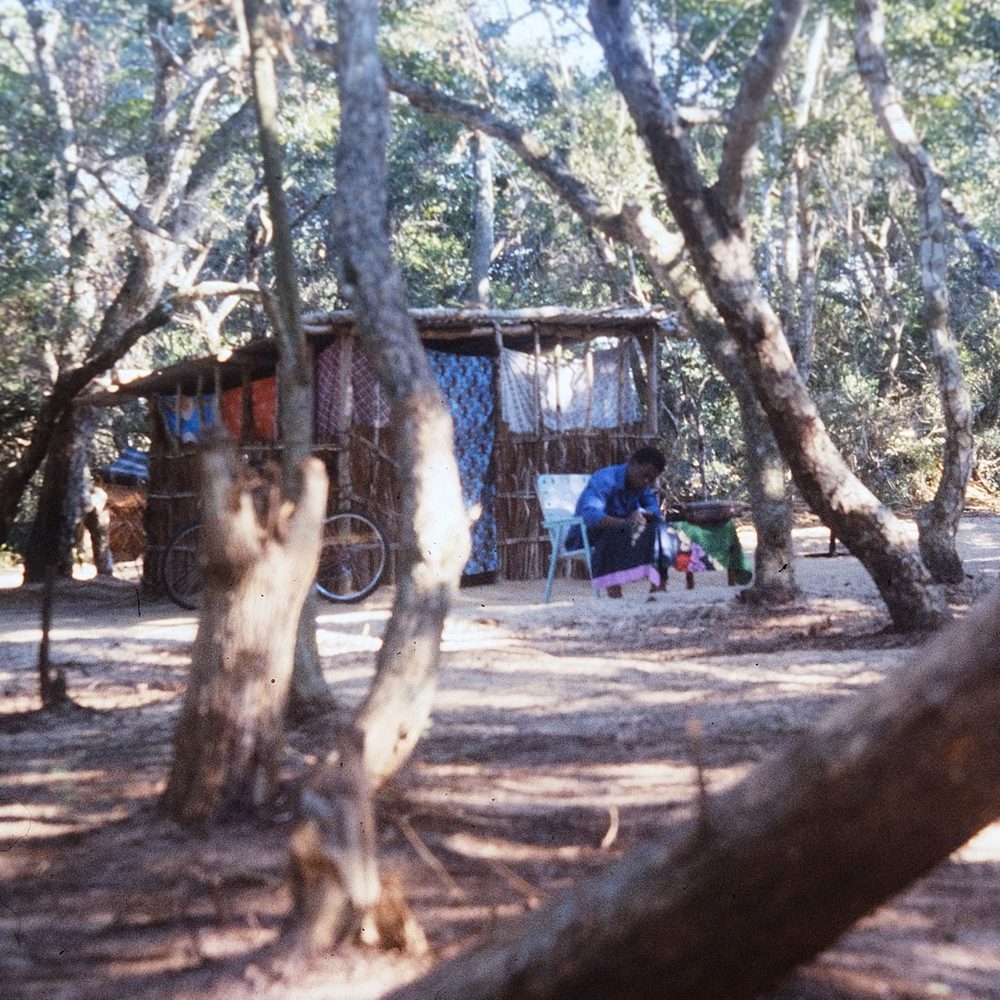
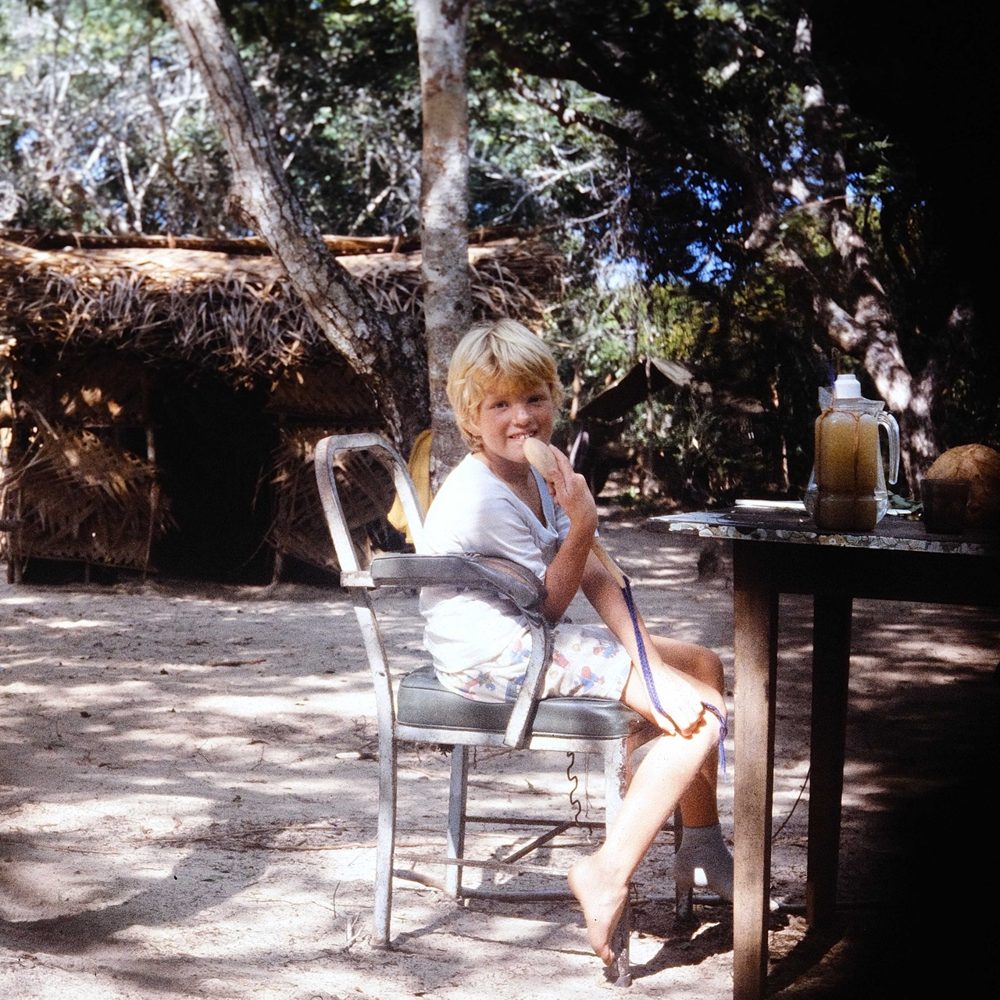
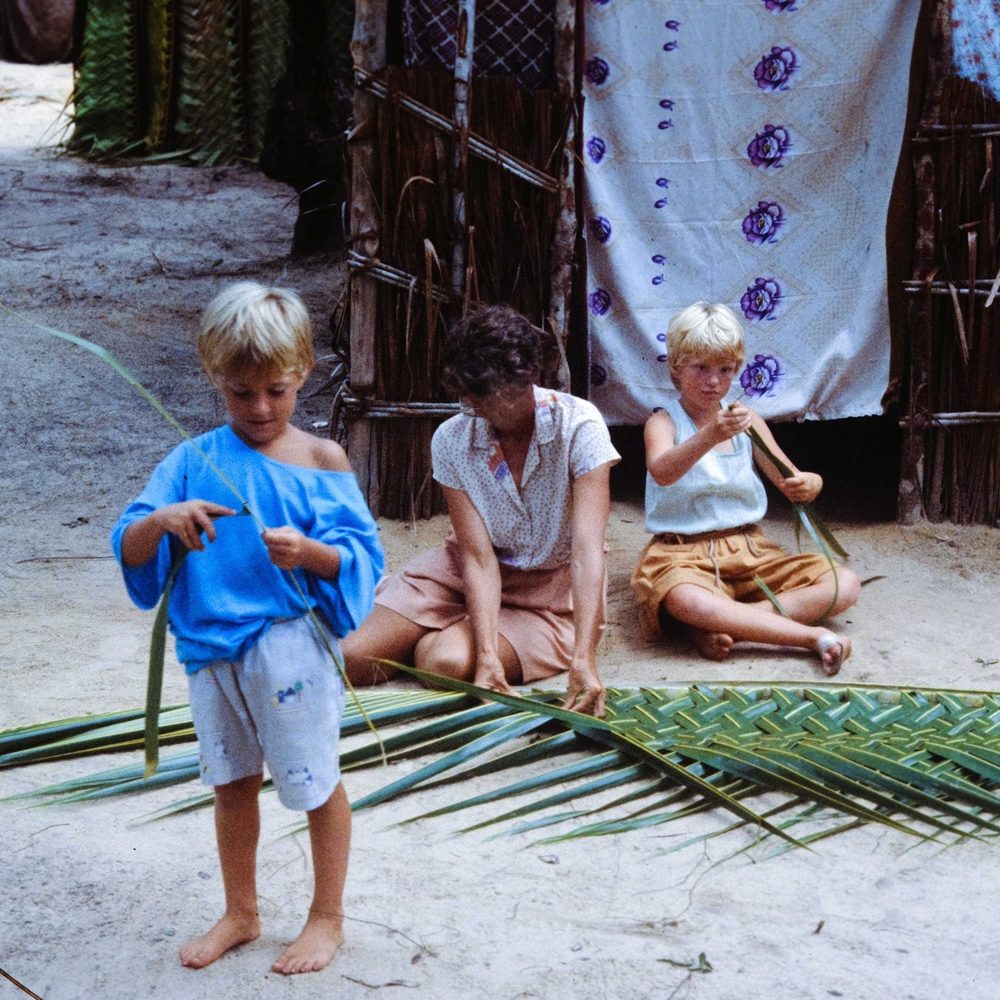
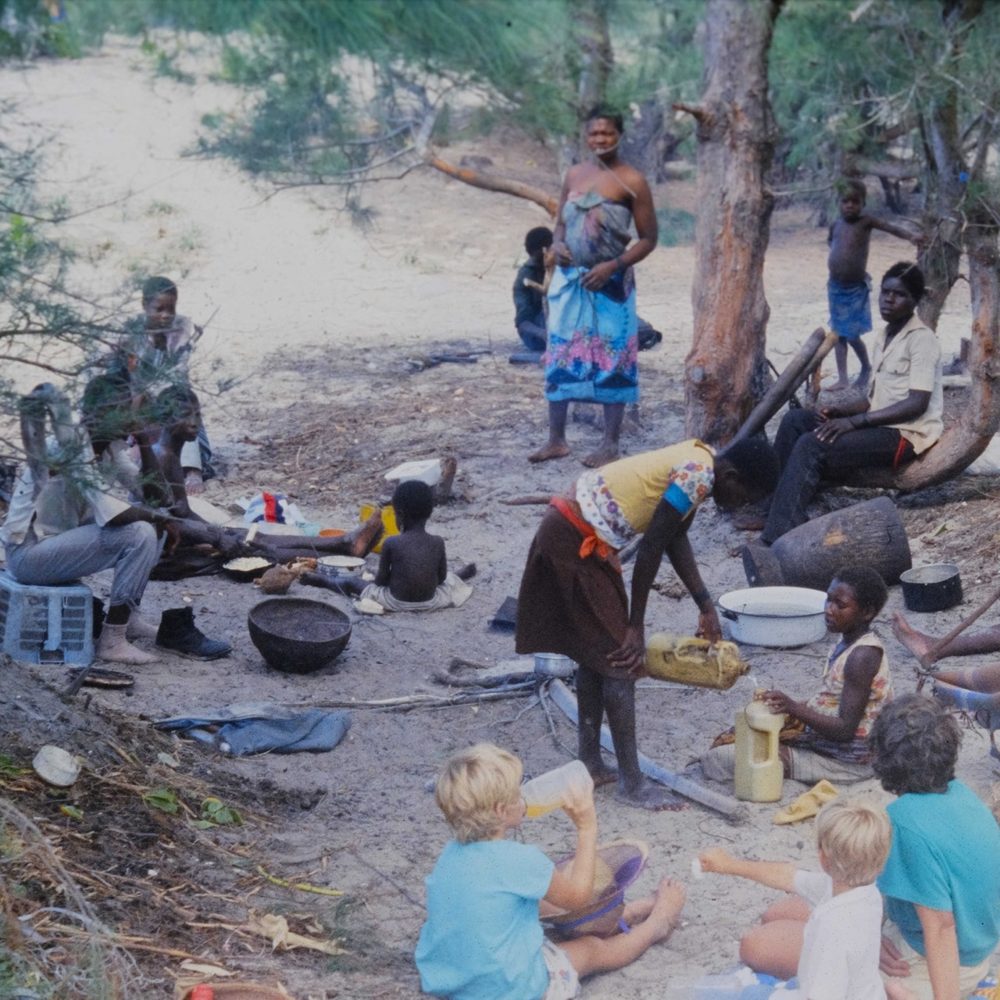
Our home for seven weeks
Amazingly, our captors returned our camera. We took most of these photographs in secret, through gaps in the walls of our hut or latrine.

The author
David Muller is a South African architect. He designed Nelson Mandela's home at Qunu. He kept a diary through every day of his family's captivity, and thirty years later turned it into this book.
Read an extract
Chapter 14. Day 34 of our capture
I am about to begin writing when a mortar explodes on the northern outskirts of the camp, about 200 metres away from the kitchen where Sandy, too, is about to start writing. Patricio, who’s also been soaking up the sun's warmth near Sandy, shouts, ‘Frelimo, we go!’
The troops on the parade ground erupt and, with bloodcurdling yells, come running like a human tidal wave past our house to where the mortar has landed. Fortunately, because of Sandy’s premonition, all our possessions are packed, and within minutes we are on our way out of the camp, this time fleeing southwest, away from the constant barrage of mortars now falling behind us. Intense volleys of automatic rifle fire can be heard in the direction of the coast – a disturbing development because it means that the camp is being encircled.
Except for the soldiers – who are all running towards the shooting – rivulets of people are seeping from the vegetation, draining in the same general direction away from the danger. We join with them, little tributaries merging to form a growing river of fugitives.
Keep reading
Our pace is fast, frantic, bordering on panic. Once again, we meet up with the evacuees from the hospital and fall into step behind two stretcher-bearers carrying a man who’s had his lower right leg amputated. With one hand he struggles to cling to the narrow stretcher, no wider than two interlocked palm leaves, while with the other he holds a comb, a bar of soap and a small tin box to his chest. In the jostling, they repeatedly fall from his grip. I retrieve them, restoring them to his hollow chest and weak grasp. His eyes stare blindly upwards, and only his thin fingers move as he presses his meagre possessions to his body.
Although we are retreating fast, the sound of shooting and exploding mortars stays with us. A volley of shots close to our left makes some break into a panicked run. Bullets are cracking overhead. There is no doubt this is more serious than the first attack, and yet Sandy and I feel inexplicably calm. After days of boredom, melancholic thoughts and even longing for death, life suddenly seems rich and to be savoured.
The path we follow descends into a shallow river valley. It emerges from the forest and crosses a sandy 200-metre-wide floodplain that leads to the shallow river. It’s an obvious place for an ambush, and Patricio urges us to move faster. Tammy and Seth are doing well, running continually and keeping up with us. Our feet drag in the soft sand, and our breathing comes in panting gasps, but survival instincts have taken over, and our bodies keep moving, desperate to reach the shelter of the forest on the far side of the river.
Looking back, we see an odd collection of humanity scrabbling across the brilliant white sand behind us. Clanking children burdened with pots and pans, some pushing bicycles and others carrying chairs. Women struggle beneath large bundles tied up in sheets. One little girl even stumbles along, carrying a steaming pot of what must have been her family’s breakfast porridge on her head. Despite the danger, Sandy and I exchange smiles as taller people help themselves to handfuls of porridge as they overtake the little girl; a literal fast-food takeaway.
Gunfire from the direction of the camp drives us onward. The shooting is so intense and sustained that it’s no longer possible to make out individual shots and the sound comes to us distorted in an angry swishing as it filters through the trees. The river is impossible to cross, the water hidden behind an impenetrable green wall of reeds and banana trees. Although exhausted, everyone keeps running, following the river for a kilometre, until we reach a point where a path has broken through the wall of reeds. The water is clear and knee-deep.
On the opposite bank I become aware that the trees growing in the lush grass through which we are wading are laid out in a widely spaced grid. Coconut palms alternate with a mixture of citrus trees: lemons, oranges and tangerines. In the midst of the grid, dominating this long-neglected orchard, a huge baobab grows. It’s the first baobab I’ve ever seen, and I’m drawn to it, unable to resist the urge to run my hand over its plump, metallic bark. The act of veneration, of touching this ancient survivor, is curiously reassuring, as if I’m connecting with my guardian angel.
Loud thuds in the distance and shots from nearby on the opposite bank of the river remind me it’s no time for philosophic contemplation. God willing, we hope, like the tree, to add many more years to our lives.
Beyond the orchard the path swings to the right, away from the river, and begins to ascend a shallow side valley. At 8.30 am we stop midway up this valley. By then we must have walked and run about six kilometres. Bundles are eased off heads and shoulders and placed in the shade of a grove of mimosa trees. No one speaks, but everyone sits facing the camp from where continuous shooting can still be heard. Ears strain, trying to interpret the battle's outcome. We burrow our way under some trees and find a small clearing where we sit in the morning dew. Patricio follows us and crouches down, cradling his AK-47 between his knees. A furrowed brow has replaced his normal perplexed, impish look. To ease the tension, Sandy starts telling Tammy and Seth her latest Palm Village story, but Patricio narrows his eyes and shakes his head.
Captain Hook, the Sergeant Major and George join us. They order their chairs be set up in the shade about 20 metres from us. Seth’s friend Boxo and another small boy arrive; both carry AK-47s and push bicycles with handlebars that are level with their heads. They settle next to us, the small boy sniffing wetly every few minutes. More stragglers trickle in, and I estimate at least 300 sitting around us. A donkey carrying all the kitchen paraphernalia clanks its way up the valley. Sandy catches sight of Machiavelli being carried past on a stretcher. I spend the time writing up my diary. Patricio’s mention of helicopters flying by and Russian MIG jets is very much on my mind, and I wonder if the next move will be an airborne attack. Tammy and Seth sit quietly, using us as pillows.
I need not have worried. Five minutes later, a soldier comes running up the valley with a message that we can begin making our way back to the camp. Slowly, everyone emerges into the open and forms into a single file. We wait to allow the stretcher-bearers to pass ahead. As the Doctor passes, he smiles and gives Tammy and Seth gentle pats on the head. His work is about to begin. On the path down to the river, we pass an old man leading a blind boy about Tammy’s age. The tenderness shown towards the sick and injured amazes us. The burden placed upon the community must be considerable, and contradicts the brutality with which they treat their fellow citizens – Mozambicans who in all ways are identical to them save that they happen to identify with Frelimo.
Readers of the first edition
Reviews of Not Child's Play
“A superb autobiographical telling of a family taken hostage after their boat runs aground. It brings to life the anguish and at times pleasure of living and surviving in a guerrilla camp. The story of their rescue by South African forces and the level of military intelligence behind it is compelling.”
“Beautifully written, this is a poignant account of a sanity-threatening experience that could, at any moment, have gone terminally wrong. It is as gripping as any thriller… it is a true tale shot through with humour and a keen sense of the ridiculous. I recommend this story unreservedly.”
“The book is so much more than a story about the capture of a family by a terrorist group in Mozambique. In essence, it deals with how one deals with life when it throws a mixture of evil and good at you.”
Coming June 2027. Be first to read it.
Join the list for the cover reveal, the publication date and the first chance to pre-order Just Children.